The New Hate Watch
On rage bait, reflexive negativity, and the new anxiety of influence

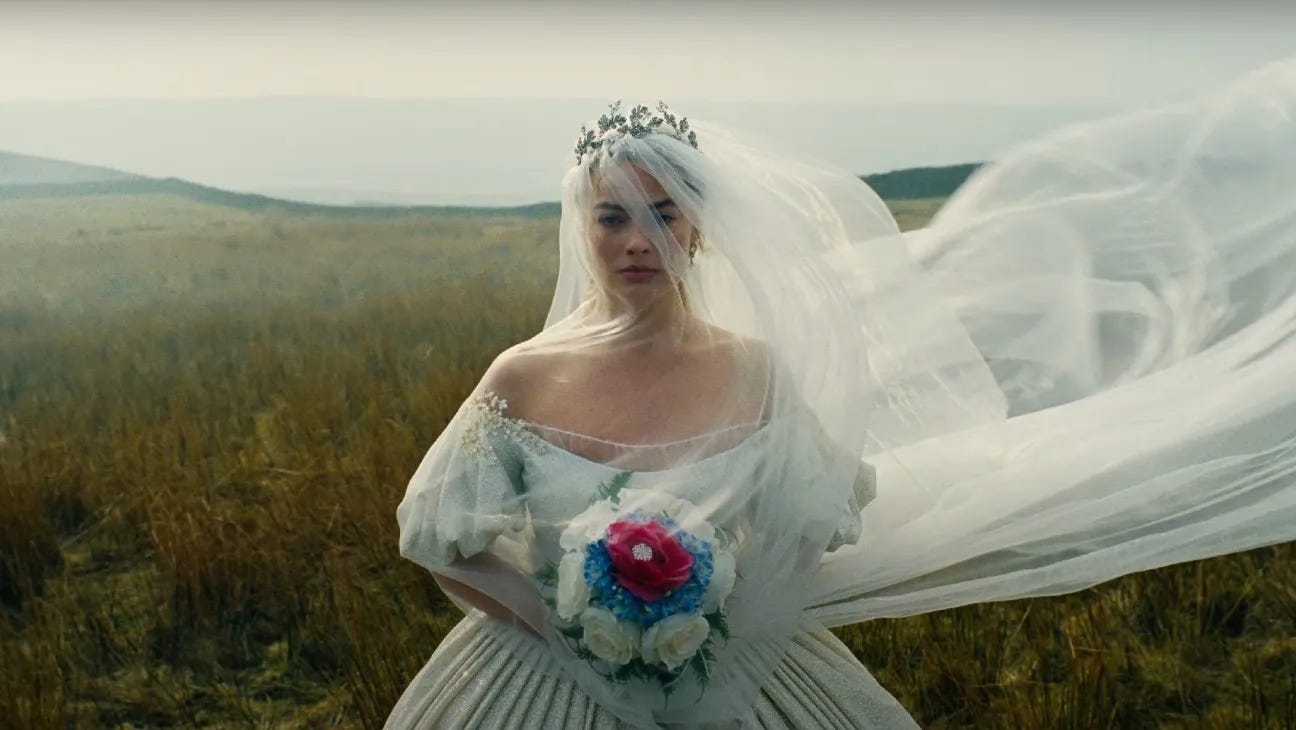
It will be a long time until I watch Emerald Fennell’s new adaptation of Wuthering Heights. I was planning to be a day-one girlie and see it in theatres on Valentine’s Day, but found myself souring not on the movie itself, but on the Discourse. I was open-minded about this gothic, wacky-looking adaptation — excited by the Guillermo del Toro-esque attention to physicality in the filming, encouraged by the book clubs taking on the source material, defensive of the reflexive negativity that was popping up online a full year before the film’s release. People yelling about the cut of Cathy’s wedding dress, tossing off reductive arguments about race in the novel (including the director’s own comments), calling it “smooth-brained” and pretending that was a compliment. As we got closer to the release date, I realized the miasma of feelings around this movie was just too thick to allow me any kind of individual viewing experience. If I watch this movie now, I will never know what I actually think about it. So, a pleasure deferred. You’ll undoubtedly get my take in September or something once the backlash has had its own backlash and everyone has moved on to hating the new Pride and Prejudice miniseries because Darcy is blonde.
Anytime the word “Discourse” pops up in this blog, you know I’m hot under the collar about something, and today is no exception. Today, I want to talk about how we are all in the Bad Place, social media-wise, and how that is ruining our ability to enjoy, full stop. It is no secret that social media algorithms are attuned to conflict, that they encourage it and surface more of it in order to keep users glued to their screens. We all know this; everything is enshitified online to get you aggravated and hyper-focused on the object of your aggravation. Then, once they’ve got you (me) leaving long comments on Vulture articles about how ACTUALLY Jack Lowden can totally play a brooding character, and this blonde erasure will not stand, then they’ve got you hooked and can sell you strawberry blonde Darcy hair dye or something. You’ll go watch the things you’ve been arguing with strangers about online if only for the purpose of having your priors confirmed. The glee with which people crowed over how awful, how stupid, how anti-intellectual this new Wuthering Heights is! So many were clearly so pleased to have their priors confirmed, to continue the bitching and the condemnation of Fennell as a director (most of these people will, of course, watch her next film with equal fervor). The few small voices I heard saying, “Um, guys, I actually liked it?” were quickly drowned out. One creator claimed that it was a perfectly enjoyable movie as long as you didn’t see it with an English major, and honestly, if you want to watch it for any other reason than to practice your dunking, that may be best.
I miss the days when I could watch Masterpiece Theatre in peace; then again, perhaps those days are not yet behind us. I haven’t heard anyone kvetching over the fact that two adaptations of The Count of Monte Cristo are coming out within two years of each other (one was in French, so perhaps that doesn’t count for the Discourse), but then again, that’s a book about men written for men with adaptations directed by men, so maybe (just maybe) that has something to do with it. There have been many incredible adaptations from Masterpiece, including their own 2009 version of Wuthering Heights, but those adaptations have never needed wide cultural cachet — their audience is fixed and sturdy, if aging a bit more rapidly than I’m sure they would wish. But adaptations looking for theatrical wide release or streaming attention have to draw that attention somehow, and for Wuthering Heights, in particular, that attention came from marketing — to wit, deliberate rage baiting. The glimpses of risque costumes we got on social media and the teaser trailers, Charli XCX snippets, and later, Architectural Digest tours of the intricate set were all intended to inflame the passions of traditionalists. The flames of the Discourse on social media could have powered a small city. Even though the vast majority of it was negative — apprehensive at best and downright “this movie is already racist” at worst — a costume drama based on a novel most of us were forced to hate-read in high school opened to an $83 million box office. That should just about cover the reported marketing budget.
Everything is being hate-marketed to you now (except Heated Rivalry, which seems to exist in an untouchable Canadian bubble of joy). Did you want to see Wicked: For Good? Well, first you’ll have to wade through the oversaturation of ten thousand press tour appearances, the Discourse around the female cast’s weight loss, and the director’s car commercial (?). Interested in the new season of Love is Blind? Well, here are 6 couples who should all get restraining orders from each other and 1 cosmically perfect couple. Which do you think will get proportionally more screen time? It’s in the 10 shows a year Ryan Murphy forces down our throats (which all do numbers due to excessive hate watching). It’s in the obsessive conspiracy theory-ing around Rob’s supremacy on The Traitors. We love to hate things right now, and the people marketing these ventures know that.
This is rampant in the book world, too. Threads has become this hate-read cesspool (there’s literally a substack dedicated to aggregating and commenting on this phenomenon, and it is very funny, but also I sometimes wish it didn’t need to exist!) where people doxx authors for saying things like “I didn’t like Peeta that much from Hunger Games.” This was also a very popular place for people to get angry that this season of Bridgerton is inspired by Cinderella, and that’s bad because Ever After is already the best Cinderella (this is as far as I could logic with this argument). And it’s not just threads- TikTok, Insta, and Reddit all get in on the fun, “cancelling” the author of the fantasy Daggermouth because she dared to post a quote from her own book (her own words, mind you) in response to the violence in Minnesota. Separately, people accused her of using AI to write her book because she likes a dash every now and again. She is, mind you, an anti-AI advocate. Most people who were talking about the book’s “cancellation” had no idea what the controversy even was, but their algorithms were serving them rage-bait videos of people burning the books. This is one example among many.
Look, it enrages me that I own Bridgerton deodorant (it smells so good). I hate spon con tie-ins (exception, anything Hot Topic wants to do with Twilight) and honestly, the marketing gods have gotten completely over their skis. This shit will reach maximum stupidity, and there will be a significant backlash to the way marketing has taken over our lives. But the way marketing has tapped into the hate watch is different, more insidious, and more subtle. A long time ago, ubiquitous YouTubers Jake and Logan Paul realized that no attention is really bad attention, and it was only a matter of time before this cancerous thinking spread to every corner of our society. That it’s reached “Wuthering Heights adaptations” is strong proof that we’re cooked. I don’t really see any solution except “reject all public opinion.” Our likes and dislikes, our inclinations and childhood favorites, our enthusiastic organic responses were never meant to stand up to either the ocean of public bitching or the subtle manipulations of the algorithm and the marketers that control it.
This is why I rarely talk about art I don’t like (Ryan Murphy being a strong exception, but he knows what he’s doing. I say this even as my boyfriend hate watches The Beauty in the other room — we are by no means immune). I don’t want you to reject something because it didn’t work for me. If Wuthering Heights doesn’t work for me (and for all my defense of it, it may not), I’d almost rather not tell you. I found myself reticent to write this past year for this exact reason — should I be sharing my unedited thoughts with everyone? What responsibility do I bear when I do so? Then I decided to just stop overthinking everything and tell you guys how much I like a book about cats and wizards because I’m a writer, and what are you gonna do? I don’t have a solution to any of this other than to stop my ears and just read what I want to read, watch what I want to watch, and react to them in my own way. And maybe share those reactions with you all, should it feel right.
I've mentioned once before in a comment how I basically don't consume culture. But even so, your piece really resonated with me, and I agree with you completely! Just way too much negativity out there, which gets in the way of enjoying stuff.